

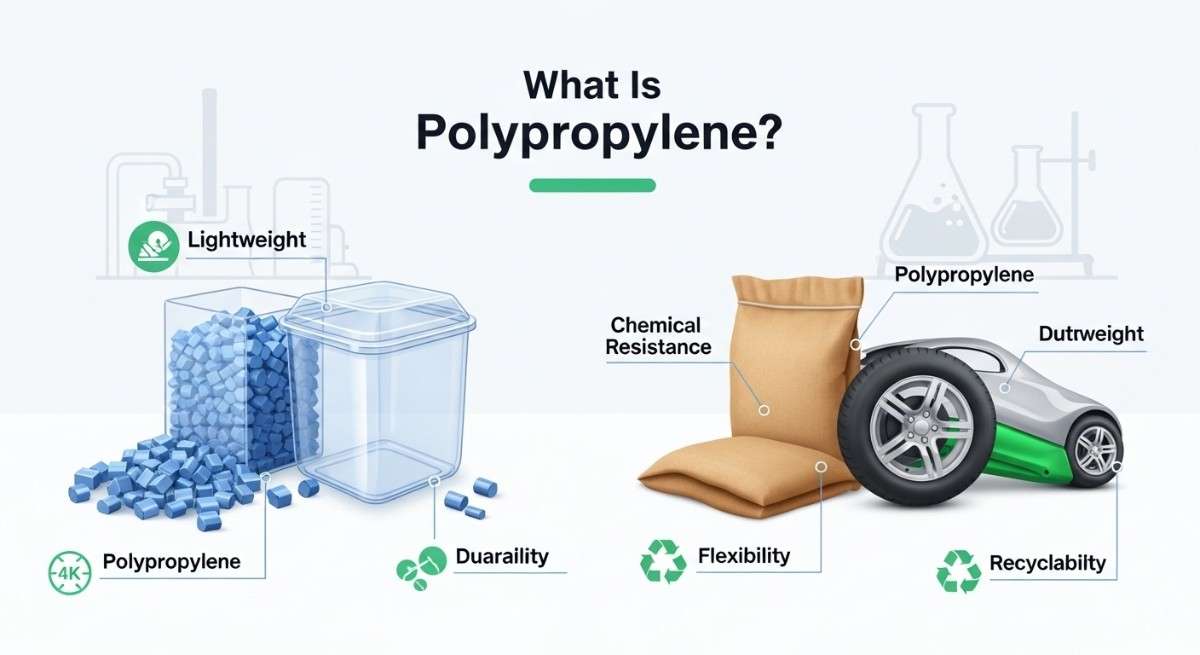
What Is Polypropylene?
What is polypropylene? Learn about polypropylene properties, uses, manufacturing process, advantages, and industrial applications of PP plastic.
Polypropylene is one of the most widely used thermoplastic polymers in the world, playing a critical role across packaging, automotive, medical, construction, and consumer goods industries. Known for its durability, chemical resistance, and cost efficiency, polypropylene plastic has become a preferred material for manufacturers and industrial buyers seeking performance and scalability.
In this guide, we’ll explore what polypropylene is, its material properties, manufacturing process, industrial uses, and advantages and disadvantages, helping buyers and engineers make informed sourcing and material-selection decisions.
Polypropylene
Polypropylene (PP) is a thermoplastic polymer derived from petroleum-based propylene monomers. It belongs to the polyolefin family and is recognized for its lightweight structure, high fatigue resistance, and versatility in industrial applications.
Key Characteristics of Polypropylene Material
Semi-crystalline thermoplastic polymer
Low density with high strength-to-weight ratio
Excellent resistance to chemicals, acids, and alkalis
Suitable for injection molding, extrusion, and thermoforming
Because of these properties, PP plastic is widely used in both consumer and heavy-duty industrial products.
Polypropylene Chemical Structure and Polymer Types
Polypropylene is produced by polymerizing propylene gas using catalysts. Its molecular structure determines its performance characteristics.
Types of Polypropylene Polymer
Homopolymer Polypropylene
High stiffness and tensile strength
Common in packaging, textiles, and consumer products
Copolymer Polypropylene
Improved impact resistance and flexibility
Used in automotive polypropylene plastic and industrial containers
Polypropylene Material Properties
Understanding polypropylene material properties is essential for selecting the right grade for industrial or commercial use.
Mechanical Properties
High fatigue resistance (excellent for hinges and caps)
Good tensile strength
Low coefficient of friction
Thermal Properties
Polypropylene melting point: ~160–170°C (320–338°F)
Maintains performance in high-temperature environments
Suitable for hot-fill and heat-resistant packaging
Physical Properties
Polypropylene density: ~0.90 g/cm³ (lighter than most plastics)
Moisture resistant
Electrically insulating
Chemical Resistance
Resistant to solvents, acids, and bases
Ideal for chemical containers and industrial tanks
How Polypropylene Is Manufactured
The polypropylene manufacturing process involves advanced polymerization techniques to ensure consistency and performance.
Manufacturing Steps
Propylene extraction from petroleum or natural gas
Polymerization using Ziegler-Natta or metallocene catalysts
Pelletizing into polypropylene pellets or resin
Processing through injection molding or extrusion
Common Industrial Processing Methods
Injection molding polypropylene
Extrusion-grade polypropylene
Blow molding and thermoforming
Polypropylene Plastic Uses Across Industries
Industrial Polypropylene Applications
Polypropylene’s versatility makes it ideal for large-scale manufacturing and industrial use.
Packaging Industry
Polypropylene packaging material
Food grade polypropylene containers
Caps, closures, films, and trays
Automotive Industry
Automotive polypropylene plastic components
Dashboards, bumpers, battery cases
Lightweight parts for fuel efficiency
Medical & Healthcare
Medical-grade polypropylene syringes
Laboratory equipment
Sterile packaging
Construction & Infrastructure
Pipes and fittings
Geotextiles
Insulation materials
Consumer & Industrial Goods
Storage containers
Industrial polypropylene products
Fibers and woven fabrics
Polypropylene Advantages and Disadvantages
Advantages of Polypropylene Material
Lightweight and cost-effective
Excellent chemical resistance
High fatigue strength
Food-safe and medical-grade options available
Easily recyclable
Disadvantages of Polypropylene
Lower UV resistance without additives
Brittle at extremely low temperatures
Limited adhesion with paints or adhesives
Understanding these trade-offs helps buyers choose the right polypropylene resin or pellets for their application.
Polypropylene vs Other Plastics
Polypropylene vs Polyethylene
Polypropylene is stiffer and more heat-resistant
Polyethylene offers better impact resistance at low temperatures
Polypropylene vs PVC
Polypropylene is lighter and more chemically resistant
PVC offers better rigidity but contains plasticizers
Is Polypropylene Safe and Recyclable?
Is polypropylene safe?
Yes. Food-grade and medical-grade polypropylene are approved for direct contact with food and pharmaceuticals.Is polypropylene recyclable?
Yes. PP plastic is recyclable (Resin Identification Code #5) and widely accepted in industrial recycling streams.
Frequently Asked Questions (FAQ)
What is polypropylene plastic used for?
Polypropylene is used in packaging, automotive parts, medical devices, textiles, construction materials, and industrial containers.
Why is polypropylene used in packaging?
Its lightweight nature, chemical resistance, food safety, and durability make it ideal for food and industrial packaging.
What are the key benefits of polypropylene material?
High strength-to-weight ratio, chemical resistance, recyclability, and cost efficiency.
What is the melting point of polypropylene?
The polypropylene melting point ranges from 160°C to 170°C.
Is polypropylene suitable for industrial use?
Yes. Industrial polypropylene is widely used due to its mechanical strength, thermal stability, and processing flexibility.
How is polypropylene manufactured?
It is produced through the polymerization of propylene gas and processed into resin, pellets, or finished components.
Conclusion
Polypropylene is a high-performance, cost-efficient, and versatile polymer that supports a wide range of industrial and commercial applications. Its durability, thermal stability, and chemical resistance make it a preferred material for manufacturers, engineers, and procurement teams worldwide.
For businesses seeking reliable polypropylene suppliers, bulk polypropylene material, or custom industrial polypropylene products, PP plastic remains a future-ready solution aligned with sustainability and performance demands.