

CNC Milling Explained: Technology, Process, and Importance
Dive into the world of CNC turning with expert insights. Learn about CNC turning machines, services, and their applications in industries like defense, medical, and aerospace. Discover the process and benefits of precision CNC turning.
After working in the machining industry for over a decade, I can say one thing with certainty: CNC turning is a game-changer. If you’re new to the world of CNC turning, or you’re looking to refine your knowledge, you’re in the right place. Whether you’re involved in precision CNC turning, CNC turning services, or working with CNC turning machines, I’m here to share what I’ve learned from real-world experience and how these technologies shape industries every day.
What is CNC Turning and How Does It Work?
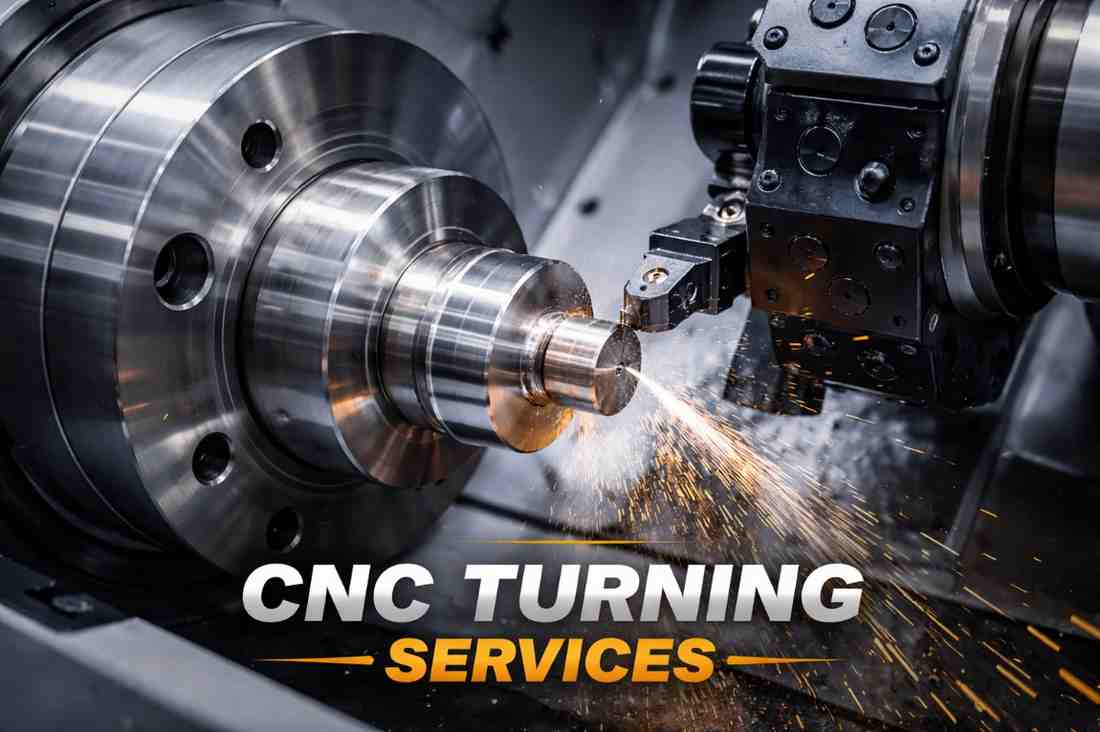
In simple terms, CNC turning is a manufacturing process where a rotating workpiece is cut by a fixed cutting tool. It’s called “turning” because the workpiece rotates while a tool (often a carbide insert) removes material to shape the part. Unlike traditional methods, the CNC turning machine is computer-controlled, making it possible to produce parts with extreme accuracy and efficiency.
Imagine working with a piece of metal that’s spinning at high speed, and as it rotates, a tool progressively carves away material. It’s like a sculptor chiseling a statue, but much faster, with far less human error. This is the beauty of CNC turning.
Types of CNC Turning Machines
There are different types of CNC turning centers, each designed to meet specific manufacturing needs:
- CNC Lathe: The traditional turning machine. It typically operates on two axes and is used for simpler, symmetrical parts like shafts, bushings, and spindles. The machine holds the workpiece in place, while the cutting tool moves along the rotating material to shape it.
- CNC Turning Center: A more advanced version of the lathe, CNC turning centers usually operate on three or more axes, allowing them to perform more complex operations like drilling and milling. These machines are often used for more complicated parts, especially those requiring multi-axis CNC turning.
- Vertical CNC Turning Machines: These machines are used for heavy and large parts. By positioning the workpiece vertically, gravity helps prevent the cantilevering effect seen in horizontal machines, which can lead to vibration and decreased accuracy in large components.
CNC Turning Services: Why Precision Matters
Over the years, I’ve worked with industries ranging from automotive to medical, and the common denominator for all of them is the need for precision CNC turning. Here’s why:
- High Precision for Complex Parts: When it comes to producing parts for industries like aerospace or medical devices, precision is everything. A slight error in the machining process could lead to catastrophic failures. I’ve seen clients who trusted CNC turning for high-precision parts and, because of it, avoided costly reworks and maintained safety standards.
- Speed and Efficiency: One of the biggest advantages of CNC turning services is their speed. Once the machine is set up with the right program, it can run continuously with minimal intervention, reducing production time and costs. When I was working on a large batch of CNC turned parts for an automotive supplier, the ability to produce parts quickly made all the difference.
- Versatility in Materials: CNC turning machines are not limited to just one material. They can work with a range of materials like aluminum, brass, stainless steel, and even plastics. This makes CNC turning a perfect fit for industries that require different materials for specific applications.
CNC Turning vs. CNC Milling: What’s the Difference?
In my experience, this is one of the most common questions from clients. So let me break it down. CNC milling and CNC turning are often used together, but they serve different purposes.
- CNC Turning: Best suited for cylindrical or rotational parts (think: gears, spindles, shafts).
- CNC Milling: Ideal for creating complex geometries and intricate shapes (think: brackets, housings, or complex molds).
The real magic happens when CNC turning and milling are combined in a single CNC turning and milling machine. This is especially useful in industries that need to reduce setup times and improve part accuracy, such as the medical or aerospace sectors.
Real-Life Example: CNC Turning in the Medical Industry
One project that stands out in my mind was for a medical device manufacturer. They needed a custom CNC turned part that would be inserted into a surgical tool. The tolerance for this part was incredibly tight—around ±0.0002 inches. Without precision CNC turning, achieving such exact measurements would have been impossible with manual machining. CNC turning allowed us to create a flawless part, meeting the exact specifications and maintaining safety standards.
Common CNC Turning Operations
Let me give you a rundown of some of the most common CNC turning operations I’ve worked with:
- Facing: Cutting a flat surface perpendicular to the workpiece’s rotational axis. This is often the first step in preparing a part for further operations.
- Grooving/Parting: Cutting grooves or removing sections of the workpiece, often used to create O-ring grooves or to separate a part from the stock material.
- Threading: Creating threads on the inside or outside of a workpiece. I’ve used CNC turning machines to create threads that require perfect alignment for applications like screws and bolts.
- Drilling: If you need a hole in your part, CNC turning can drill holes precisely on the centerline of the rotating material, or even at an angle in some cases.
How to Choose the Right CNC Turning Service
When selecting a CNC turning service, there are a few things I always recommend keeping in mind:
- Experience with Your Material: Different materials behave differently during the turning process. Whether you’re working with brass CNC turned parts, aluminum CNC turning, or stainless steel CNC turned components, make sure the service you choose has experience with your material.
- Technology and Capabilities: Not all CNC machines are created equal. Ask about the specific machine capabilities—do they offer CNC vertical turning? Can they perform CNC Swiss turning? A CNC Swiss turning machine is excellent for making high-precision, small parts, particularly in industries like medical device manufacturing.
- Customization: Custom CNC turning parts may be required if your project has unique geometries or tolerances. Ensure the service offers custom CNC turning options to suit your needs.
FAQs about CNC Turning
Q1: What are the benefits of CNC turning for small parts?
A1: CNC turning is perfect for small, high-precision parts like CNC turned components. The accuracy, repeatability, and speed allow for efficient production without sacrificing quality, which is especially important in industries like medical or aerospace.
Q2: How does CNC turning improve manufacturing efficiency?
A2: With CNC turning services, you get faster setup times, more precise cuts, and the ability to produce large quantities without compromising on quality. I’ve worked on several projects where quick turn CNC machining allowed us to meet tight deadlines without losing accuracy.
Q3: What materials can be used with CNC turning?
A3: CNC turning can handle a wide range of materials, including brass, aluminum, stainless steel, plastics, and even harder alloys like titanium. The choice of material depends on the application and the desired part performance.
Q4: What’s the difference between CNC turning and CNC milling?
A4: CNC turning and CNC milling are both vital machining processes, but they are used for different types of parts. CNC turning is primarily used for cylindrical parts and works by rotating the material while the cutting tool removes material. CNC milling, on the other hand, involves stationary workpieces while the tool rotates, making it ideal for creating more complex, multi-faceted geometries. In many cases, CNC turning and milling are combined to create intricate parts.
Q5: How precise is CNC turning?
A5: CNC turning offers incredible precision, often achieving tolerances as tight as ±0.0001 inches. This level of accuracy is especially crucial for industries like aerospace and medical devices, where even the smallest deviation can compromise the functionality of the part. Precision CNC turning machines ensure consistent quality across all parts in a batch, eliminating the risk of human error and variability.
Conclusion:
Looking back on my years of experience with CNC turning, I can say it’s a crucial process for anyone looking to create precise, high-quality parts. From industries like aerospace, medical, automotive, and defense, CNC turning services are indispensable.
Whether you’re designing parts for high-end machinery or crafting small, precision components, CNC turning and CNC turning centers provide unmatched accuracy and flexibility. Investing in precision CNC turning services has allowed companies like mine to deliver reliable, high-quality results—on time and within budget.
So, if you’re looking for top-notch CNC turning services, consider the depth of experience, capabilities, and material knowledge of your provider. With the right partner, CNC turning can elevate your production to new heights.