
What Is a Non-Ferrous Metal?
What is a non-ferrous metal? Learn the definition, properties, uses, and benefits of non-ferrous metals, including aluminum, copper, and zinc, for global industrial applications.
In today’s advanced manufacturing and global trade environment, non-ferrous metals play a critical role across industries such as aerospace, electronics, construction, automotive, and renewable energy. If you are a manufacturer, exporter, or industrial buyer, understanding what non-ferrous metals are, their properties, and their applications can help you make better sourcing and production decisions.
This guide provides a complete, easy-to-understand explanation of non-ferrous metals, their characteristics, benefits, real-world uses, and why they are in high demand worldwide—especially in the USA, Canada, Germany, and Japan.
Non-Ferrous Metals
Non-ferrous metals are metals and alloys that do not contain iron or contain it only in negligible amounts. Because they lack iron, these metals do not rust like steel and iron-based materials.
In simple terms, when people ask “what are non-ferrous metals?”, the answer is:
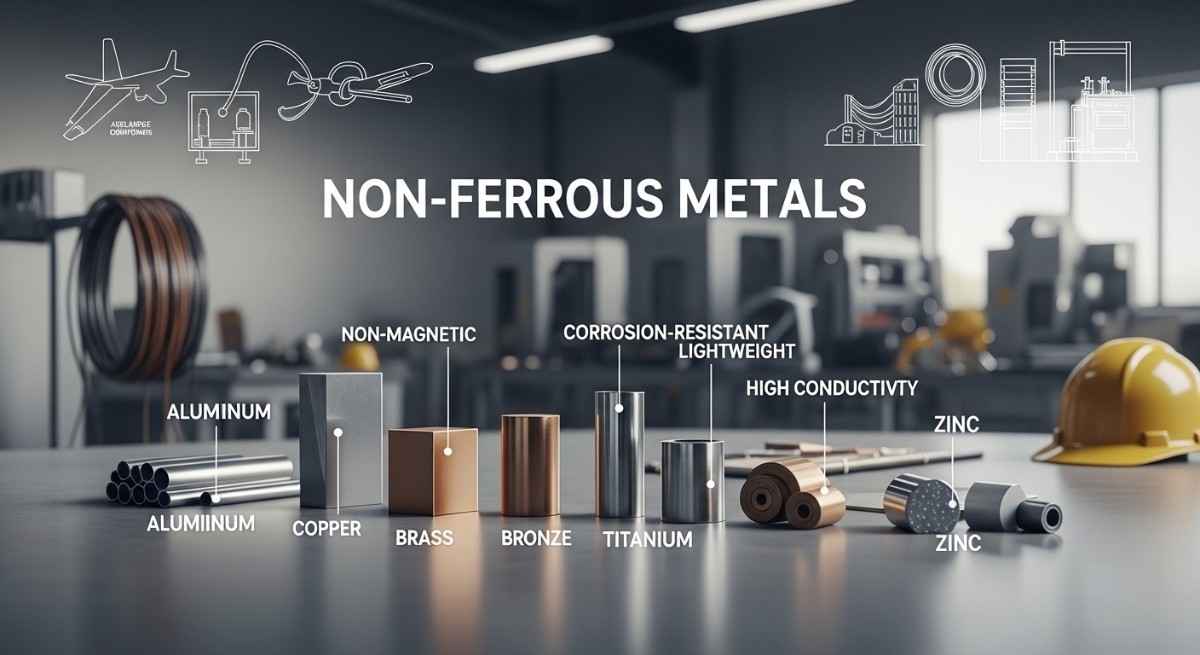
Metals that are lightweight, corrosion-resistant, non-magnetic, and highly conductive.
Non-Ferrous vs Ferrous Metals
| Feature | Non-Ferrous Metals | Ferrous Metals |
|---|---|---|
| Iron Content | No or minimal | High |
| Corrosion Resistance | Excellent | Poor (unless treated) |
| Magnetic | Non-magnetic | Usually magnetic |
| Weight | Lightweight | Heavy |
| Conductivity | High | Low to moderate |
This non-ferrous vs ferrous metals comparison highlights why non-ferrous materials are preferred for precision, high-performance, and export-grade manufacturing.
Non-Ferrous Metal Properties & Characteristics
The unique non-ferrous metal properties make them essential for modern industrial applications:
Corrosion-resistant metals – ideal for marine and outdoor environments
Lightweight non-ferrous metals – crucial for aerospace and automotive sectors
High electrical and thermal conductivity
Non-magnetic metals – perfect for electronics and medical equipment
Excellent recyclability – supports sustainability goals
These non-ferrous metal characteristics significantly reduce maintenance costs and improve product lifespan.
Non-Ferrous Metals List (Common Types)
Here is a practical non-ferrous metals list used globally:
Examples of Non-Ferrous Metals
Aluminum – lightweight, corrosion-resistant, widely used in aerospace
Copper – a high-conductivity non-ferrous metal for electronics
Brass – copper-zinc alloy used in fittings and components
Bronze – a durable non-ferrous alloy for bearings and marine use
Zinc – corrosion protection and die casting
Lead – batteries and radiation shielding
Nickel – high-temperature and corrosion-resistant alloys
Titanium – a premium metal for the aerospace and medical industries
Non-Ferrous Alloys & Materials
Non-ferrous alloys are engineered by combining two or more non-ferrous metals to enhance strength, durability, and resistance.
Popular non-ferrous metal materials include:
Aluminum alloys (aerospace & automotive)
Copper alloys (electronics & power transmission)
Nickel-based alloys (chemical & high-heat applications)
Non-Ferrous Metal Applications & Uses
Non-Ferrous Metal Applications by Industry
Aerospace: Best non-ferrous metals for aerospace include aluminum, titanium, and nickel alloys
Electronics: Non-ferrous metals for electronics, such as copper and aluminum ensure high conductivity
Construction: Roofing, cladding, and structural components
Automotive: Lightweight non-ferrous metals for fuel efficiency
Energy: Solar panels, wind turbines, and power cables
These non-ferrous metal uses are expanding as industries demand lighter, stronger, and more sustainable materials.
Importance of Non-Ferrous Metals in the Global Industry
The importance of non-ferrous metals continues to grow due to:
Rising demand for electric vehicles and renewable energy
Growth in global manufacturing and exports
Need for corrosion-resistant and high-performance materials
Increasing focus on sustainability and recycling
The non-ferrous metal industry supports global supply chains and high-value exports.
Non-Ferrous Metal Recycling & Sustainability
Non-ferrous metal recycling is one of the most efficient recycling processes worldwide:
Retains original metal properties
Reduces production costs
Lowers environmental impact
This also drives demand for pricing for non-ferrous scrap metal, especially in international markets.
Non-Ferrous Metal Suppliers, Distributors & Export Opportunities
Businesses seeking non-ferrous metal suppliers or non-ferrous metal distributors often look for:
Consistent quality
International export compliance
Custom non-ferrous metal fabrication
Competitive global pricing
High-demand markets include:
Non-ferrous metal export USA
Non-ferrous metal buyers in Canada
Non-ferrous metal buyers in Germany
Non-ferrous metal buyers in Japan
Reliable non-ferrous metal export companies gain a strong advantage in these regions.
FAQs
What are non-ferrous metals?
Non-ferrous metals are metals that do not contain iron and are known for corrosion resistance, conductivity, and lightweight properties.
What are examples of non-ferrous metals?
Common examples include aluminum, copper, brass, bronze, zinc, titanium, and nickel.
Why are non-ferrous metals important?
They are essential for aerospace, electronics, automotive, and energy industries due to durability, efficiency, and recyclability.
Are non-ferrous metals recyclable?
Yes, non-ferrous metal recycling is highly efficient and environmentally sustainable.
Which non-ferrous metals are best for electronics?
Copper and aluminum are the most widely used non-ferrous metals for electronics due to their high conductivity.
Conclusion
Understanding what a non-ferrous metal is, along with its properties, uses, and benefits, is essential for manufacturers, exporters, and industrial buyers. From aerospace and electronics to construction and energy, premium non-ferrous metal products deliver performance, durability, and long-term value.
If you are searching for non-ferrous metal solutions, reliable suppliers, or custom fabrication for global markets, partnering with an experienced provider can help you stay competitive and profitable.