
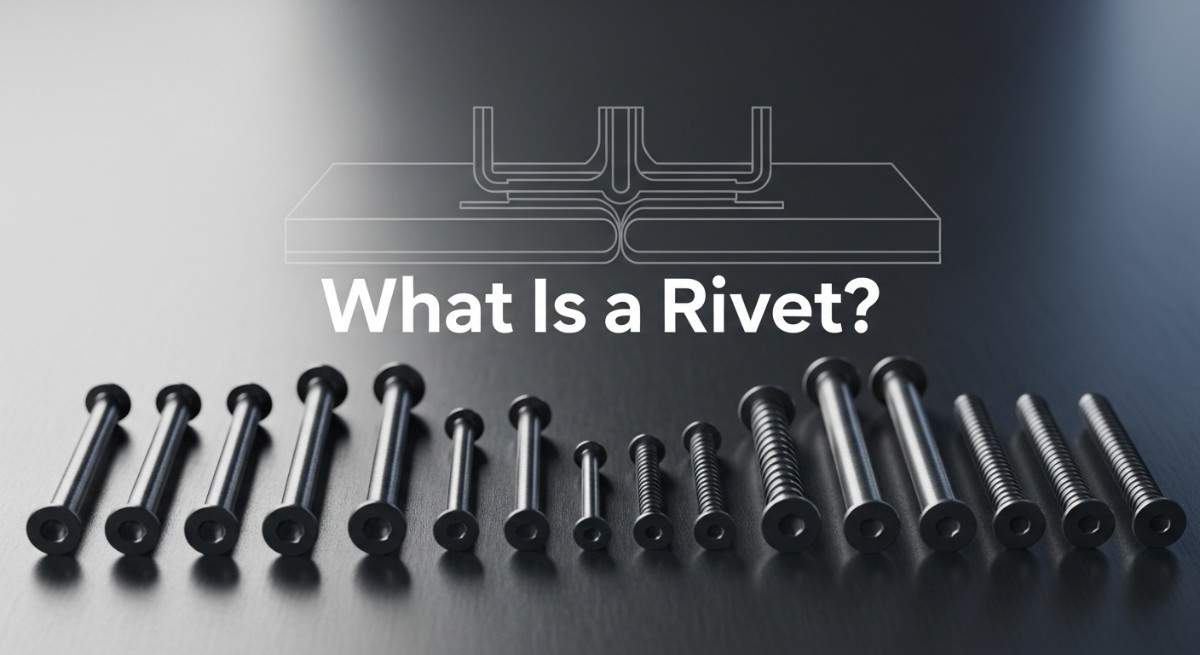
What Is a Rivet?
Discover what a rivet is, how rivets work, and the different types of rivet fasteners used in construction, aerospace, automotive, and manufacturing. Learn how to choose and buy high-strength rivets from global suppliers.
Despite the rise of advanced fastening technologies, rivets remain one of the most trusted and widely used mechanical fasteners across global industries. From towering steel structures and aircraft fuselages to automotive frames and ship hulls, rivets provide permanent, vibration-resistant, and high-strength connections that other fasteners often cannot match.
For manufacturers, engineers, procurement managers, and industrial buyers in the USA, Canada, Germany, and Japan, understanding what a rivet is, how rivets work, and which rivet fasteners to choose is critical for ensuring structural integrity, regulatory compliance, and long-term performance.
This comprehensive guide explores rivet definitions, types of rivets, applications, installation methods, and buying considerations, helping you make informed decisions for industrial and commercial use.
Rivet
A rivet is a mechanical fastener used to permanently join two or more materials together, most commonly metal components. Unlike screws or bolts, which can be removed, a rivet forms a permanent fastener by plastically deforming during installation.
A typical rivet consists of:
- Head – the pre-formed end
- Shank (body) – the cylindrical portion inserted through materials
- Tail – the end that deforms to create a second head
Once installed, the rivet locks the materials together, creating a joint that resists shear forces, vibration, and fatigue.
How Rivets Work
Understanding how rivets work explains why they are still preferred in critical applications.
Rivet Working Principle
- Holes are drilled or punched through the materials being joined
- The rivet is inserted through the aligned holes
- Force is applied to the tail (using a rivet gun, press, or hammer)
- The tail expands and forms a second head
- The materials are tightly clamped together
This process distributes load evenly across the joint and minimizes stress concentrations, making rivets ideal for structural and heavy-duty applications.
Rivet Fasteners vs Other Mechanical Fasteners
When compared to screws, bolts, or welding, rivet fasteners offer several advantages:
Advantages of Rivets
- Permanent and tamper-resistant
- Excellent vibration resistance
- High shear strength
- No loosening over time
- Uniform load distribution
- Lower long-term maintenance
Limitations
- Not removable
- Requires precise hole alignment
- Installation may require specialized tools
For applications where long-term durability is more important than removability, rivets are often the superior choice.
Types of Rivets and Their Uses
Choosing the correct rivet depends on material thickness, load requirements, and installation access. Below are the most common types of rivets used in industrial and commercial applications.
1. Solid Rivets
Solid rivets are the oldest and strongest type of rivet fastener.
Key Features
- One-piece construction
- Requires access to both sides
- Exceptional shear and tensile strength
Common Uses
- Aerospace structures
- Bridges and steel frameworks
- Shipbuilding
- Heavy machinery
Solid rivets are widely used in rivet fasteners for aerospace applications due to their reliability under extreme stress.
2. Blind Rivets (Pop Rivets)
A blind rivet, often called a pop rivet, can be installed from one side only.
Key Features
- Internal mandrel pulls the rivet body
- Fast and easy installation
- Ideal for confined or inaccessible spaces
Common Uses
- Sheet metal assemblies
- HVAC systems
- Automotive body panels
- Maintenance and repair work
Blind rivets are popular for rivet fasteners for metal where speed and accessibility are critical.
3. Structural Rivets
Structural rivets are designed for high-load applications where traditional blind rivets are insufficient.
Key Features
- Higher strength than standard blind rivets
- Excellent vibration resistance
- Certified for load-bearing structures
Common Uses
- Steel construction
- Bridges
- Railways
- Heavy-duty industrial equipment
These are commonly used as rivet fasteners for heavy-duty applications.
4. Tubular and Semi-Tubular Rivets
These rivets have a partially hollow shank, reducing the force needed for installation.
Key Features
- Faster installation
- Lower material deformation
- Cost-effective for mass production
Common Uses
- Electronics
- Appliances
- Light machinery
Blind Rivet vs Solid Rivet: A Practical Comparison
| Feature | Blind Rivet | Solid Rivet |
| Installation Access | One side | Both sides |
| Strength | Moderate to high | Very high |
| Installation Speed | Fast | Slower |
| Typical Applications | Sheet metal, repairs | Aerospace, bridges |
| Cost | Lower | Higher |
For buyers evaluating blind rivet vs solid rivet, the choice depends on load requirements and installation conditions.
Common Rivet Uses Across Industries
Rivets are used across multiple industries due to their strength and permanence.
Construction Industry
- Structural steel connections
- Bridges and towers
- Architectural metalwork
Aerospace Industry
- Aircraft fuselage assembly
- Wing structures
- High-fatigue joints
Automotive Industry
- Chassis components
- Body panels
- Exhaust systems
Shipbuilding and Marine
- Hull construction
- Deck structures
- Corrosion-resistant joints
Manufacturing
- Industrial equipment
- Machinery frames
- Production tooling
These applications demonstrate why industrial rivets for manufacturing remain essential worldwide.
Rivet Installation Methods
Correct rivet installation is critical for joint integrity.
Standard Rivet Installation
- Drill hole to precise diameter
- Insert rivet
- Deform the tail using a press or a hammer
- Inspect finished head
Pop Rivet Installation Guide
- Insert the rivet into the hole
- Place the rivet gun over the mandrel
- Pull the trigger to expand the rivet
- Mandrel snaps off automatically
Improper installation can reduce strength and lead to joint failure.
Structural Rivets vs Other Fasteners
Structural Rivets vs Bolts
- No loosening under vibration
- Faster installation
- No torque checking
Structural Rivets vs Welding
- No heat-affected zones
- Easier inspection
- Suitable for dissimilar metals
For many engineers, structural rivets vs other fasteners comes down to performance, reliability, and lifecycle cost.
How to Choose the Right Rivet Fasteners
When selecting rivet fasteners, consider:
- Load and shear requirements
- Material compatibility (steel, aluminum, stainless steel)
- Environmental exposure (corrosion, temperature)
- Compliance with industry standards
- Installation accessibility
Choosing the wrong rivet can compromise safety and performance.
Buying Rivet Fasteners: A Guide for Industrial Buyers
When looking to buy rivet fasteners online, buyers should prioritize suppliers that offer:
- High-strength rivets for sale
- Consistent quality certifications
- Custom rivet fasteners supplier capabilities
- Rivet fasteners wholesale pricing
- Reliable international shipping
Regional Buying Considerations
- Rivet fasteners USA – fast delivery, ASTM standards
- Rivet suppliers Canada – energy and construction focus
- Germany rivet manufacturers – precision engineering
- Rivet types Japan market – advanced manufacturing standards
Why Work With a Professional Rivet Supplier?
A reliable rivet supplier provides:
- Technical support and product selection guidance
- Custom materials and dimensions
- Competitive bulk pricing
- Compliance with global standards
For businesses seeking the best rivets for manufacturing, supplier expertise directly impacts product performance and cost efficiency.
FAQs
What is a rivet and how does it work?
A rivet is a permanent mechanical fastener that joins materials by expanding its tail during installation, forming a secure joint.
What are rivets commonly used for?
Rivets are used in construction, aerospace, automotive manufacturing, shipbuilding, and heavy industry.
Are rivets stronger than screws?
In shear-load and vibration-heavy environments, rivets often outperform screws because they do not loosen over time.
What is the difference between a pop rivet and a blind rivet?
They are the same—“pop rivet” is a common name for blind rivets.
Where can I buy industrial rivet fasteners?
You can buy rivet fasteners online from certified suppliers offering bulk pricing and international shipping.
Conclusion
Rivets continue to play a vital role in global manufacturing and construction. Understanding what a rivet is, how rivets work, and the different types of rivets and uses allows businesses to make smarter engineering and purchasing decisions.
Whether you need rivet fasteners for construction, aerospace, automotive, or heavy-duty industrial applications, working with a trusted supplier ensures durability, safety, and long-term value.
Contact our team today to request quotes, custom rivet solutions, or wholesale pricing for global delivery.