What Is GMAW Welding?
What is GMAW welding? Understand gas metal arc welding, its benefits, applications, and how professional GMAW welding services support modern manufacturing.
In today’s fast-paced manufacturing environment, efficiency, consistency, and weld quality are critical. Industries such as automotive manufacturing, heavy equipment fabrication, shipbuilding, construction, and industrial machinery depend on welding processes that can deliver high productivity without compromising strength or precision. One welding method that consistently meets these demands is GMAW welding.
So, what is GMAW welding, and why has it become one of the most widely used welding processes across industrial sectors worldwide?
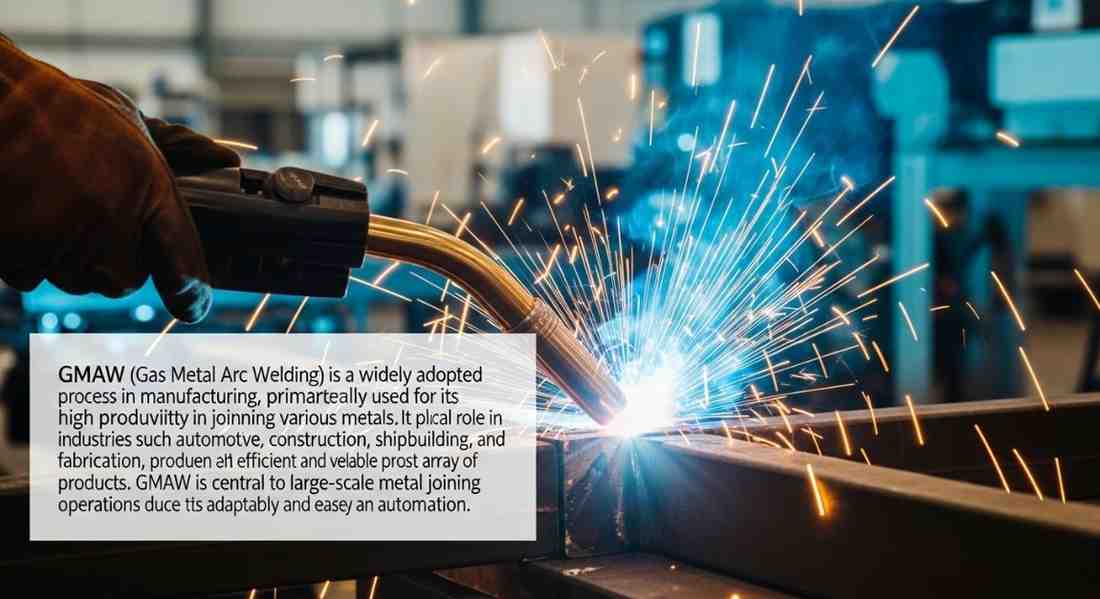
Gas Metal Arc Welding (GMAW)—commonly referred to as MIG welding or MAG welding—is a semi-automatic or fully automatic arc welding process that uses a continuously fed wire electrode and shielding gas to create strong, clean, and repeatable welds. Because of its versatility and scalability, GMAW welding is a preferred solution for manufacturers and industrial fabricators seeking cost-effective, high-quality welding solutions.
This comprehensive guide explains the GMAW welding meaning, definition, process, techniques, equipment, advantages, limitations, and real-world applications, helping buyers, engineers, and decision-makers understand why GMAW remains a cornerstone of modern industrial welding.
GMAW Welding
GMAW welding, or Gas Metal Arc Welding, is an arc welding process where an electric arc forms between a consumable wire electrode and the workpiece. The heat generated by the arc melts both the electrode and the base metal, creating a molten weld pool that solidifies into a strong joint.
A shielding gas protects the weld pool from atmospheric contamination such as oxygen and nitrogen, ensuring weld integrity and mechanical strength.
In simple terms, the GMAW welding method refers to a welding method that combines:
- A continuously fed wire electrode
- Controlled electrical current
- Shielding gas for protection
- High deposition rates and automation capability
This makes GMAW ideal for high-volume industrial production.
Gas Metal Arc Welding Process Explained
How Does GMAW Welding Work?
The gas metal arc welding process operates through the following steps:
- Wire Feeding
A wire electrode is continuously fed through the welding gun from a spool. - Arc Formation
When the wire contacts the workpiece, an electric arc is created, generating intense heat. - Metal Melting
The arc melts both the electrode wire and the base metal, forming a weld pool. - Shielding Gas Protection
Shielding gas flows through the gun, preventing oxidation and contamination. - Solidification
As the weld pool cools, it solidifies into a strong metallurgical bond.
Because of this continuous process, GMAW welding offers faster travel speeds and higher productivity compared to traditional stick welding methods.
GMAW vs MIG Welding: Is There a Difference?
One of the most common questions buyers ask is: GMAW vs MIG welding—are they the same?
Technically:
- GMAW (Gas Metal Arc Welding) is the official AWS classification.
- MIG welding (Metal Inert Gas welding) is a common industry term.
MIG vs MAG Welding
- MIG welding uses inert gases like argon or helium.
- MAG welding (Metal Active Gas welding) uses active gases like CO₂ or argon-CO₂ mixtures.
Both fall under the GMAW welding process, and the terminology often depends on the shielding gas used.
Types of GMAW Welding (Metal Transfer Modes)
Understanding types of GMAW welding is essential for selecting the right process for specific applications.
1. Short Circuit Transfer
- Best for thin materials
- Low heat input
- Excellent for out-of-position welding
- Common in automotive and sheet metal fabrication
2. Globular Transfer
- Larger metal droplets
- Higher spatter levels
- Typically used with CO₂ shielding gas
- Less common in precision manufacturing
3. Spray Transfer
- Fine metal droplets
- High deposition rates
- Deep penetration
- Ideal for thick materials in flat positions
4. Pulsed Spray Transfer
- Controlled droplet transfer
- Reduced heat input
- Lower spatter
- Preferred in robotic and automated welding systems
These welding metal transfer modes allow manufacturers to tailor GMAW welding to specific material thicknesses and production requirements.
GMAW Welding Equipment and Components
Essential GMAW Welding Equipment
A professional GMAW welding setup typically includes:
- Welding power source (constant voltage)
- Wire feeder
- Welding gun or torch
- Shielding gas cylinder
- Consumable wire electrode
- Ground clamp
- Control system (manual or automated)
GMAW Shielding Gas Options
Selecting the best shielding gases for GMAW depends on material and application:
- 100% Argon – Aluminum and non-ferrous metals
- Argon/CO₂ Mix – Mild and carbon steel
- CO₂ – Cost-effective, deep penetration
- Argon/Oxygen Mix – Improved arc stability
Proper gas selection significantly affects weld quality and productivity.
GMAW Welding Parameters and Setup
Key GMAW welding parameters include:
- Voltage
- Wire feed speed
- Current
- Travel speed
- Gas flow rate
- Electrode diameter
A well-optimized GMAW welder setup guide ensures consistent weld penetration, minimal spatter, and high mechanical strength—critical for industrial manufacturing standards.
GMAW Welding Techniques and Best Practices
Proven GMAW Welding Techniques
- Maintain consistent stick-out length
- Use proper gun angle (typically 10–15°)
- Control travel speed to avoid burn-through
- Match the wire and gas to the base material
For GMAW welding for beginners, starting with short circuit transfer is recommended before advancing to spray or pulsed modes.
GMAW Welding Applications Across Industries
Industrial GMAW Welding Applications
GMAW welding is widely used in:
- Automotive manufacturing
- Heavy machinery fabrication
- Shipbuilding
- Oil & gas equipment
- Structural steel fabrication
- Agricultural machinery
- Robotic welding systems
Manufacturers rely on industrial GMAW welding solutions for high-volume, repeatable production with minimal downtime.
Benefits of GMAW Welding
Advantages of GMAW Welding
- High productivity and deposition rates
- Clean welds with minimal slag
- Easy automation and robotics integration
- Suitable for thin and thick materials
- Reduced operator fatigue
GMAW Welding Advantages and Disadvantages
Advantages
- Faster than SMAW
- Easier to learn than TIG
- Cost-effective for mass production
Disadvantages
- Sensitive to wind (outdoor use)
- Higher equipment cost than stick welding
- Requires a shielding gas supply
GMAW vs TIG Welding vs SMAW Welding
GMAW Welding vs TIG Welding
- GMAW is faster and more productive
- TIG offers higher precision but slower speeds
- GMAW is preferred for industrial production
GMAW Welding vs SMAW Welding
- GMAW produces cleaner welds
- SMAW is better for outdoor environments
- GMAW supports automation
Safety Measures in GMAW Welding
Professional GMAW welding safety includes:
- Proper PPE (helmets, gloves, flame-resistant clothing)
- Adequate ventilation
- Gas cylinder handling protocols
- Electrical safety compliance
Certified contractors adhere to international safety standards to protect workers and ensure compliance.
Why Choose Professional GMAW Welding Services?
Partnering with certified GMAW welding contractors offers:
- Consistent weld quality
- Compliance with AWS and ISO standards
- Advanced automation capabilities
- Scalable production solutions
Many manufacturers seek GMAW welding solutions for manufacturers that can support long-term production demands across global markets.
GMAW Welding Expertise for Global Industries
Companies in the USA, Canada, Germany, and Japan increasingly rely on:
- Professional GMAW welding services
- Industrial GMAW welding companies
- GMAW welding suppliers in the USA
These markets demand high-precision welding for automotive, aerospace, and industrial equipment manufacturing.
Internal Linking Suggestions
To strengthen SEO and user engagement, consider linking internally to:
- “MIG Welding vs TIG Welding: Which Is Best for Manufacturing?”
- “Industrial Welding Automation Solutions”
- “How to Choose the Right Welding Shielding Gas”
- “Certified Welding Services for Manufacturers”
FAQs
What is GMAW welding used for?
GMAW welding is used for automotive manufacturing, heavy machinery, shipbuilding, structural steel, and industrial fabrication.
Is GMAW welding the same as MIG welding?
Yes, MIG welding is a common name for GMAW, though technically MIG refers to inert gas applications.
What materials can be welded using GMAW?
Carbon steel, stainless steel, aluminum, and other alloys.
Is GMAW suitable for beginners?
Yes, GMAW welding for beginners is easier to learn compared to TIG welding.
Can GMAW welding be automated?
Absolutely. GMAW is ideal for robotic and automated welding systems.
Conclusion:
Understanding what GMAW welding is helps manufacturers make informed decisions about productivity, quality, and scalability. With its versatility, automation compatibility, and cost-efficiency, gas metal arc welding remains one of the most powerful welding processes in modern industry.
If your business requires professional GMAW welding services, industrial-grade welding solutions, or certified GMAW welding expertise, partnering with an experienced provider can significantly improve production efficiency and product quality.
Ready to Upgrade Your Welding Capabilities?
Contact a trusted industrial GMAW welding company today to discuss customized welding solutions for your manufacturing needs and start generating stronger, more reliable welds at scale.