

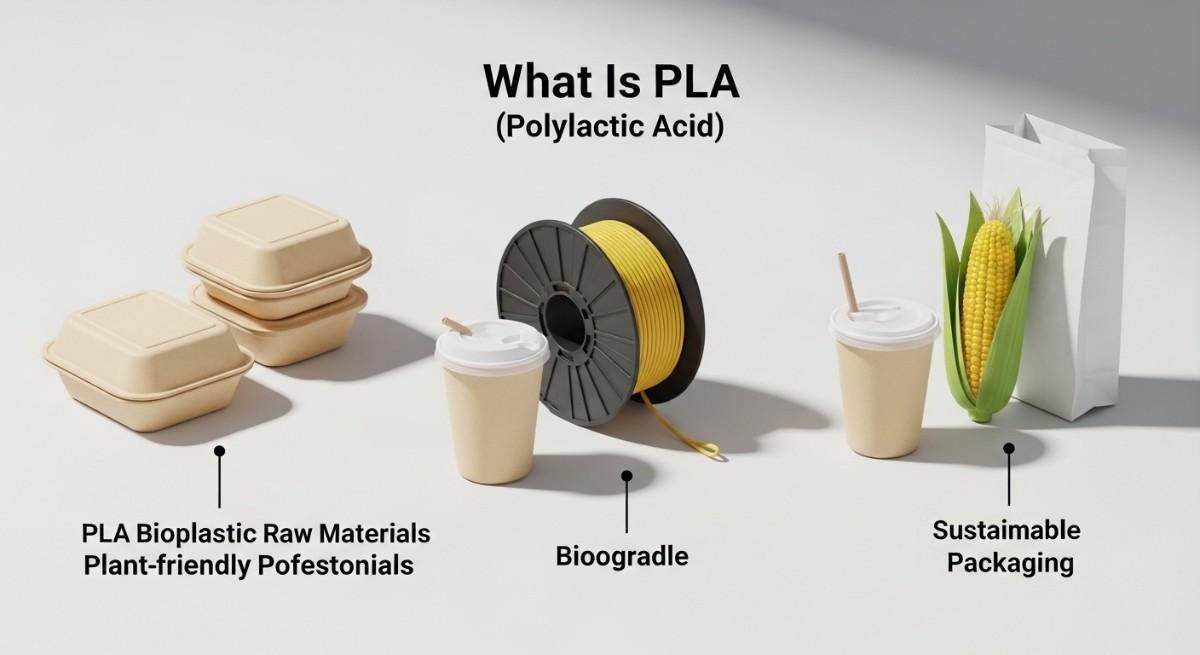
What Is PLA?
What is PLA? Learn about PLA material properties, uses, biodegradability, packaging applications, and how to buy PLA resin from trusted suppliers worldwide.
As global industries shift toward sustainability, PLA (Polylactic Acid) has emerged as one of the most important biodegradable and bio-based plastics in modern manufacturing. From eco-friendly packaging to 3D printing filaments and medical devices, PLA plastic is redefining how businesses reduce environmental impact without sacrificing performance.
This guide explains what PLA plastic is, how it’s made, its material properties, advantages, disadvantages, and applications, and why manufacturers across the USA, Canada, Germany, and Japan are increasingly choosing PLA for commercial and industrial use.
Polylactic Acid
PLA (Polylactic Acid) is a bioplastic polymer made from renewable plant-based raw materials such as corn starch, sugarcane, or cassava. Unlike conventional plastics derived from petroleum, PLA is produced using fermented plant sugars, making it a leading solution in the biodegradable plastic PLA material category.
PLA is widely known as:
PLA bioplastic
PLA polymer material
PLA biodegradable plastic
PLA resin for packaging and molding
It offers a strong balance of mechanical performance, processability, and sustainability, making it suitable for both consumer and industrial markets.
How Is PLA Plastic Made?
Understanding PLA plastic manufacturing helps buyers evaluate quality and sourcing.
PLA Manufacturing Process (Simplified)
Fermentation – Plant sugars are fermented to produce lactic acid
Polymerization – Lactic acid is converted into PLA polymer resin
Pelletizing – PLA is processed into PLA granules or pellets
Manufacturing Use – Pellets are used for injection molding, extrusion, thermoforming, or 3D printing
This process significantly reduces carbon emissions and fossil fuel dependence, making PLA an eco-friendly plastic alternative.
PLA Material Properties
Key PLA material properties include:
| Property | Typical Value |
|---|---|
| Density | ~1.24 g/cm³ |
| Tensile Strength | ~50 MPa |
| Glass Transition Temperature | ~60°C |
| Melting Temperature | 130–180°C |
| Appearance | Transparent to opaque |
| Origin | Renewable plant-based |
PLA offers good rigidity, surface finish, and dimensional accuracy, especially compared to traditional plastics.
PLA Plastic Uses & Applications
1. PLA Plastic for Packaging
PLA is widely used as a sustainable packaging material, including:
PLA food containers
Compostable cups and cutlery
PLA films and trays
PLA blister packaging
Many brands use PLA packaging material to meet sustainability regulations in Germany, Canada, and Japan.
2. PLA Material for 3D Printing
PLA filament material is one of the most popular choices in additive manufacturing due to:
Low printing temperature
Minimal warping
Smooth surface finish
Low odor and emissions
Ideal for prototyping, consumer products, and educational use.
3. PLA Resin Applications in Manufacturing
PLA resin is used for:
Injection molding
Thermoforming
Extrusion
Fiber and textile production
Manufacturers frequently source PLA resin for injection molding from industrial PLA material suppliers.
4. Medical & Consumer Applications
PLA is also used in:
Biodegradable medical implants
Surgical sutures
Disposable hygiene products
Consumer electronics housings
Is PLA Plastic Biodegradable & Compostable?
One of the most common questions is:
Is PLA plastic biodegradable?
Yes — PLA is a biodegradable material, but under specific conditions.
Industrially compostable (high heat, humidity, microbial activity)
Not designed to degrade quickly in landfills or oceans
Meets many compostable plastic standards globally
How Long Does PLA Take to Degrade?
Industrial composting: 3–6 months
Landfill or natural environment: Several years
This makes PLA ideal for controlled waste systems and sustainable packaging programs.
PLA Plastic Advantages and Disadvantages
Advantages of PLA Plastic
Made from renewable resources
Lower carbon footprint
Food-contact safe (grades available)
Excellent clarity and appearance
Easy to process for manufacturers
Popular for eco-friendly branding
Disadvantages of PLA Plastic
Lower heat resistance than ABS or PET
Requires industrial composting
Can be brittle without modification
PLA Plastic vs ABS: Which Is Better?
| Feature | PLA | ABS |
|---|---|---|
| Source | Renewable | Petroleum-based |
| Biodegradable | Yes (industrial) | No |
| Heat Resistance | Lower | Higher |
| Environmental Impact | Low | High |
| Ease of Processing | Easier | Moderate |
PLA plastic vs ABS decisions often depend on heat resistance vs sustainability requirements.
Is PLA Plastic Safe for Food Packaging?
Yes. PLA plastic food packaging material is widely used for:
Cold food containers
Beverage cups
Disposable utensils
Food-grade PLA complies with FDA and EU food-contact regulations when sourced from certified suppliers.
Global Market Demand for PLA Plastic
Businesses worldwide are sourcing PLA from:
PLA plastic suppliers USA
PLA material manufacturers in Canada
PLA polymer suppliers in Germany
PLA plastic exporters in Japan
Industries driving demand include:
Sustainable packaging
Food service
Consumer goods
Medical devices
Automotive interiors
How to Buy PLA Plastic Resin or Granules
When sourcing PLA, look for:
Certified PLA raw material manufacturers
Food-grade or industrial-grade options
Bulk PLA plastic material availability
Reliable global logistics
Many companies actively search for:
PLA plastic suppliers
PLA granules suppliers
Buy PLA plastic resin in the USA
Industrial PLA polymer manufacturers
FAQs
Is PLA plastic recyclable?
PLA can be chemically or mechanically recycled, but it requires dedicated recycling streams.
Is PLA better than plastic?
PLA is more sustainable than petroleum plastics, but is not suitable for all high-heat applications.
What is PLA plastic used for?
Packaging, 3D printing, medical devices, textiles, and consumer products.
Is PLA compostable?
Yes, PLA compostable plastic requires industrial composting conditions.
What are the disadvantages of PLA?
Low heat resistance and limited degradation in natural environments.
Conclusion: Why PLA Plastic Is the Future of Sustainable Manufacturing
PLA (Polylactic Acid) has become one of the most important biodegradable and sustainable plastic materials in the global market. Its versatility, renewable origin, and growing regulatory support make it a strong choice for manufacturers, packaging companies, and industrial buyers.
As demand increases across North America, Europe, and Asia, businesses that adopt PLA polymer material gain a competitive edge in sustainability and compliance.