
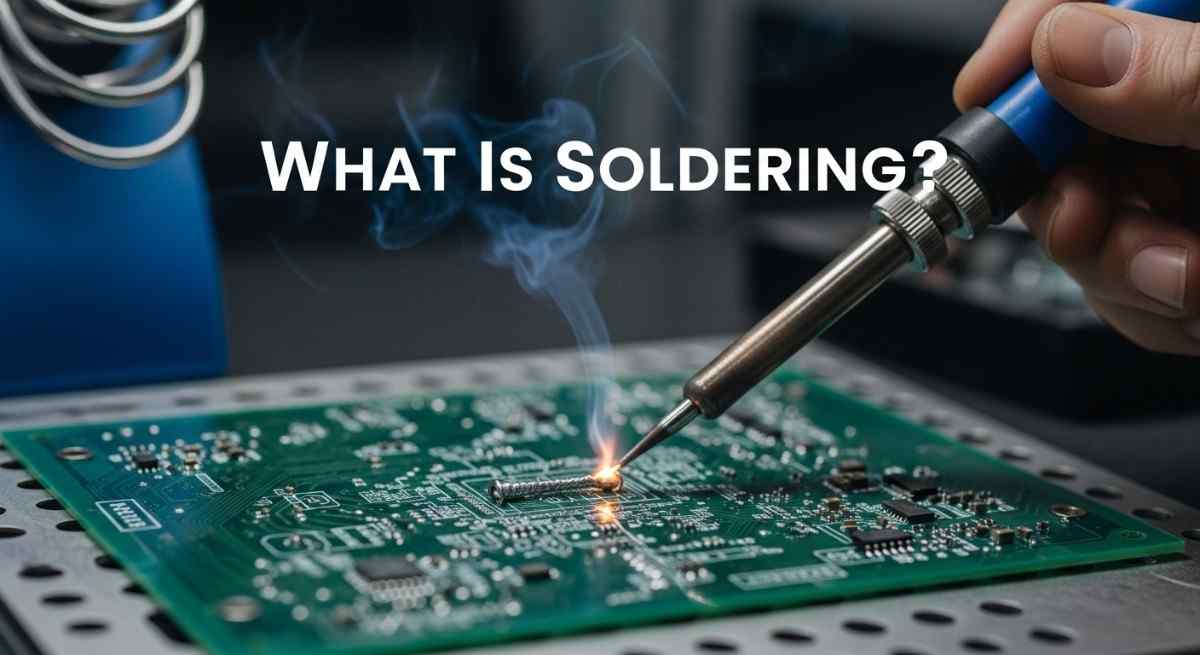
What Is Soldering? A Complete Industrial & Electronics Guide
What Is Soldering?
What is soldering? Learn the soldering process, types of soldering, tools, and why soldering is critical for reliable connections.
Soldering is one of the most critical joining processes in modern manufacturing, electronics, and industrial production. From printed circuit boards (PCBs) to aerospace systems and medical devices, soldering enables reliable electrical connectivity, mechanical stability, and long-term performance—without damaging sensitive components.
For manufacturers, engineers, and industrial buyers, understanding what soldering is, how it works, and which techniques to use is essential for ensuring product quality, compliance, and operational efficiency.
This guide explains soldering clearly, practically, and professionally—covering definitions, processes, types, tools, applications, and why soldering remains indispensable in global industries.
Soldering Meaning
Soldering is a metal-joining process in which a low-melting-point filler metal (called solder) is melted and flowed between two or more metal surfaces. Once cooled, the solder solidifies to form a durable, conductive joint.
Unlike welding, soldering does not melt the base metals. This lower-temperature process makes soldering ideal for electronics, fine metal assemblies, and applications where heat control is critical.
In practical terms, when metals are soldered, they become electrically connected, mechanically bonded, and capable of withstanding operational stress within their intended environment.
How the Soldering Process Works
The soldering process is precise and controlled. High-quality solder joints depend on preparation, correct temperature, and proper technique.
1. Surface Preparation
Metal surfaces must be clean and free from oxidation, oils, dust, or residues. Poor surface preparation is one of the most common causes of solder joint failure.
2. Flux Application
Soldering flux is applied to remove oxides and prevent oxidation during heating. Flux enables proper solder wetting, allowing molten solder to flow evenly and bond securely.
3. Controlled Heating
Heat is applied using a soldering iron, soldering station, or soldering gun, depending on the application. The joint—not the solder—is heated to ensure uniform flow and penetration.
4. Solder Application
Once the joint reaches the correct temperature, solder is introduced. The molten solder flows into the joint through capillary action, forming a continuous bond.
5. Cooling and Inspection
The joint cools naturally, creating a solid electrical and mechanical connection. Proper inspection confirms smooth fillets, full wetting, and absence of defects.
Types of Soldering
Different soldering techniques are used depending on temperature requirements, strength needs, and production scale.
Soft Soldering
Soft soldering uses low-melting solder alloys, typically tin-based. It is widely used in:
-
Electronics and PCB assembly
-
Electrical wiring
-
Plumbing and light metalwork
Soft soldering provides excellent electrical conductivity but lower mechanical strength.
Hard Soldering (Silver Soldering)
Hard soldering uses higher-temperature, silver-based alloys to create stronger joints. It is commonly used in:
-
Industrial metal assemblies
-
Mechanical components
-
Applications requiring higher durability
Automated and Industrial Soldering Methods
For large-scale production, manufacturers rely on:
-
Reflow soldering (surface-mount electronics)
-
Wave soldering (through-hole PCB assembly)
-
Dip soldering (mass termination)
-
Ultrasonic soldering (difficult-to-bond metals)
Soldering vs Welding vs Brazing
Understanding the difference between joining methods is critical for selecting the right process:
-
Soldering: Low temperature, no base-metal melting, ideal for electronics
-
Welding: High temperature, base metals melt, structural strength
-
Brazing: Higher temperature than soldering, strong joints, industrial piping and repair
Soldering is preferred when precision, conductivity, and component safety are priorities.
Soldering Tools and Equipment
Successful soldering depends on using the right tools for the job.
Common Soldering Equipment
-
Soldering iron
-
Soldering station with temperature control
-
Soldering gun for high-heat applications
-
Soldering tips (various geometries)
-
Solder wire and solder alloys
-
Soldering flux
-
Desoldering tools for rework and repair
Industrial production environments often use reflow ovens, wave soldering machines, and automated soldering systems to maintain consistency and throughput.
Soldering Applications Across Industries
Soldering is essential in industries where performance, reliability, and compliance are non-negotiable.
Key Industries Using Soldering
-
Electronics and PCB manufacturing
-
Aerospace and avionics
-
Automotive electronics
-
Medical device manufacturing
-
Telecommunications
-
Industrial automation
-
HVAC and electrical infrastructure
In electronics, soldering ensures stable signal transmission, thermal efficiency, and long-term operational reliability.
Benefits and Importance of Soldering
Soldering remains a preferred joining method because it offers:
-
Excellent electrical conductivity
-
Low thermal stress on components
-
High precision for small and complex assemblies
-
Repairability and rework capability
-
Cost-effective scalability
-
Compliance with international manufacturing standards
For industrial buyers and manufacturers, soldering directly impacts product lifespan, safety, and customer satisfaction.
FAQ’s
What is soldering used for?
Soldering is used to join metal components, especially in electronics, electrical systems, and precision manufacturing.
What tools do you need for soldering?
At minimum: a soldering iron, solder wire, flux, and safety equipment. Industrial soldering uses automated systems and temperature-controlled stations.
What is the difference between soldering and welding?
Soldering uses lower heat and does not melt base metals, making it ideal for electronics. Welding melts base metals for structural applications.
Why is soldering flux necessary?
Flux removes oxidation, improves solder flow, and ensures strong, reliable solder joints.
Is soldering safe?
Yes, when proper ventilation, temperature control, and safety practices are followed.
Conclusion
Soldering is not just a manufacturing step—it is a critical quality process that determines the reliability and performance of countless products used every day. From advanced electronics to industrial systems, precision soldering ensures components function as designed, safely and consistently.
For businesses that demand high-quality results, working with experienced soldering professionals and reliable suppliers is essential.
Contact a trusted soldering expert today to discuss your requirements, production needs, or technical challenges.