
WHAT IS TUNGSTEN INERT GAS WELDING
What is tungsten inert gas welding ? Learn the TIG welding process, benefits, applications, and why industries worldwide rely on GTAW for precision welding.
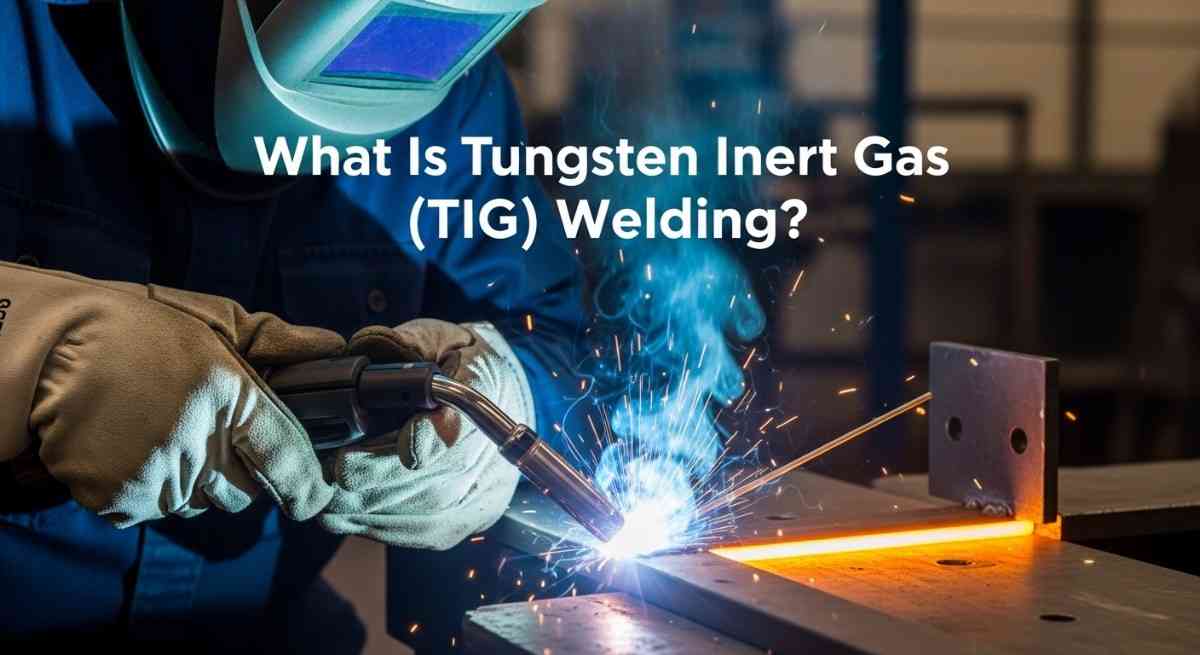
Tungsten Inert Gas welding, commonly known as TIG welding, is a high-precision arc welding process used to produce clean, strong, and high-quality welds. Officially referred to as gas tungsten arc welding (GTAW), this process utilizes a non-consumable tungsten electrode and an inert shielding gas to protect the weld area from atmospheric contamination.
TIG welding is widely regarded as one of the most advanced and controllable welding methods available today. It is especially valued in industries where weld integrity, dimensional accuracy, and surface finish are critical. This article explains what TIG welding is, how the TIG welding process works, its benefits, applications, equipment requirements, safety considerations, and how it compares with other welding processes.
TIG Welding Explained
TIG welding is an arc welding technique in which the heat required to form the weld is generated by an electric arc between a non-consumable tungsten electrode and the base metal. The electrode does not melt; instead, it maintains the arc while the heat melts the workpiece.
An inert shielding gas, most commonly argon or helium, surrounds the arc and molten weld pool. This shielding prevents oxidation, nitrogen absorption, and other forms of contamination, resulting in high-quality TIG welds with excellent mechanical and metallurgical properties.
Because of its precision and cleanliness, TIG welding is frequently used for thin materials, complex joints, and critical industrial components.
The TIG Welding Process and How It Works
GTAW Welding Process Overview
The GTAW welding process follows these core steps:
- An electric arc is initiated between the tungsten electrode and the workpiece
- The arc generates intense heat, melting the base metal
- Filler metal is added separately if required
- Inert shielding gas protects the molten weld pool
- The weld solidifies, forming a strong and clean joint
Unlike MIG welding, TIG welding does not rely on a consumable wire electrode. This separation of heat source and filler material provides superior control over weld penetration and bead shape.
TIG Welding Parameters and Settings
Key TIG welding parameters include:
- Welding current (DC or AC)
- Voltage and arc length
- Shielding gas type and flow rate
- Tungsten electrode diameter and tip geometry
- Travel speed and heat input
Proper adjustment of these parameters is essential to achieve defect-free welds and consistent results.
TIG Welding Equipment and Components
Essential TIG Welding Equipment
A typical TIG welding setup includes:
- Constant current power source (AC/DC)
- TIG torch with tungsten electrode
- Shielding gas supply (argon, helium, or mixtures)
- Filler rods (when required)
- Foot pedal or hand control for current adjustment
Tungsten Electrode Types for TIG Welding
Common tungsten electrode types include:
- Pure tungsten (mainly for AC welding)
- Thoriated tungsten (DC welding, excellent arc stability)
- Lanthanated and ceriated tungsten (low current, easy arc starting)
- Zirconiated tungsten (AC welding, reduced electrode erosion)
Selecting the correct electrode is critical for stable arc performance and electrode longevity.
TIG Welding Inert Shielding Gas Selection
Best Shielding Gas for TIG Welding
- Argon: Most commonly used; suitable for steel, stainless steel, aluminum, and titanium
- Helium: Provides deeper penetration and higher heat input
- Argon-helium mixtures: Combine arc stability with increased penetration
The choice of shielding gas directly affects weld appearance, penetration depth, and productivity.
TIG Welding Benefits and Advantages
Key TIG Welding Benefits
- Exceptional weld quality and appearance
- Precise heat control and low distortion
- Suitable for thin and delicate materials
- Welds a wide range of metals and alloys
- Minimal spatter and post-weld cleaning
- Ideal for critical and high-specification applications
TIG Welding Advantages and Disadvantages
Advantages
- High-quality TIG welds
- Superior control and consistency
- Excellent for precision welding techniques
Disadvantages
- Slower welding speed
- Higher skill requirement
- Lower deposition rate compared to MIG welding
TIG Welding Applications Across Industries
Industrial TIG Welding Applications
TIG welding applications span numerous sectors, including:
Aerospace Industry
TIG welding for aerospace is used for aircraft structures, engine components, and fuel systems where precision and reliability are mandatory.
Automotive Manufacturing
TIG welding for automotive applications includes exhaust systems, frames, and performance parts requiring clean, accurate welds.
Oil, Gas, and Power Generation
Used for pipelines, pressure vessels, heat exchangers, and boilers.
Chemical and Pharmaceutical Industries
Ideal for stainless steel piping and hygienic systems due to contamination-free welds.
Precision Manufacturing
Common in tooling, instrumentation, and high-tolerance assemblies.
TIG Welding vs MIG Welding and Other Welding Processes
TIG Welding vs MIG Welding
| Feature | TIG Welding | MIG Welding |
| Electrode | Non-consumable | Consumable wire |
| Control | Very high | Moderate |
| Speed | Slower | Faster |
| Weld Quality | Excellent | Very good |
| Applications | Precision, critical | High-volume production |
TIG Welding vs Other Welding Processes
Compared to stick and flux-cored welding, TIG welding offers cleaner welds, better control, and higher precision, making it ideal for quality-driven applications.
TIG Welding Safety Tips and Best Practices
TIG Welding Safety Tips
- Wear proper PPE (helmet, gloves, protective clothing)
- Ensure adequate ventilation
- Avoid direct electrode contact with molten metal
- Handle shielding gases safely
- Protect nearby electronic equipment from high-frequency interference
Best Practices
- Clean base materials thoroughly
- Maintain correct gas flow rates
- Use appropriate electrode types
- Monitor welding parameters closely
Regional TIG Welding Services and Market Presence
Industrial demand for TIG welding services continues to grow globally, particularly in advanced manufacturing markets such as the United States, Canada, Germany, and Japan, where strict quality standards and precision requirements drive adoption.
FAQs
What is TIG welding mainly used for?
TIG welding is used for high-quality, precision welding of stainless steel, aluminum, titanium, and critical alloys.
How does TIG welding work?
An electric arc from a non-consumable tungsten electrode melts the base metal while inert shielding gas protects the weld pool.
What is the best shielding gas for TIG welding?
Argon is most common, while helium or mixed gases are used for deeper penetration.
Is TIG welding better than MIG welding?
TIG welding offers better control and quality, while MIG welding is faster for high-volume production.
Can TIG welding be automated?
Yes, TIG welding is widely used in automated and orbital welding systems.
Conclusion
Tungsten Inert Gas (TIG) welding remains one of the most reliable and precise welding processes available. Its ability to deliver high-quality TIG welds across a wide range of materials makes it indispensable for aerospace, automotive, industrial manufacturing, and precision engineering applications.
For organizations seeking industrial TIG welding services, TIG welding continues to set the benchmark for quality, control, and performance.